
Welcome to
Guitar Lessons Brighton
In-person tuition across Brighton with clear weekly goals: real songs, strong technique, and confident playing for acoustic, electric, or classical.
Our Guitar Teachers in Brighton
Browse local guitar teachers to get started, or search again above to find the nearest guitar teacher to you.

Qualifications: BA (Hons) Professional Musicianship, A Level Music, GCSE Music, Grade 8 Guitar RSL, Grade 5 Music Theory ABRSM

Hello! I’m Vic aka Vicki Workman, a lifelong musician and educator. With nearly two decades of teaching experience, I’ve taught all ages, in various settings: private, groups, in-person, online – you name it, I’ve probably done it! For over 10 years, I owned what became the Own A Chord guitar school. At its peak, I was supporting up to 150 weekly students, as well as training and managing a small team of teachers. We put on regular jam sessions and performance events to encourage our students to collaborate, connect and experience the joy of performing on stage. Largely as a result of these activities, I saw many of our students make incredible progress. I’m a friendly, patient and supportive teacher and I’ve been teaching long enough to know that we all have our own learning styles and our own set of baggage and limitations! While I’m not qualified to be your therapist, I do understand that learning any new skill will take you out of your comfort zone will probably cause you some discomfort and unease. I will make your lessons as enjoyable as I can, giving you small wins when possible, and gently encouraging you when things get tough. I am fully DBS checked and am currently undertaking a Level 5 qualification in Education and Training. I teach Music Business at a special education provision in Brighton and Hove and am also passionate about establishing connections and opportunities between the music industry and music educators. Helping people gain the skills and confidence to perform the music they love on stage is the most rewarding thing I have ever done. After a break from teaching, in which I reconnected with my own love for music, I’ve gone back to basics. I’m teaching a select cohort of private students to go “from beginner to band” within only a few short months, distilling everything I’ve learnt into a new course, with a focus on personalised attention and performance readiness. Choose your favourite songs, master essential techniques and shine on stage! Whether you’re a beginner, returning player, or curious enthusiast, all you need is a love for music. Wherever you’re at, I can meet you there! My lessons take place either in-person in Brighton and Hove or online. I offer a free 30 minute online consultation session before any lessons can begin. This is to establish a personal connection so that I can understand your musical background, interests and goals. I’ll then provide a comprehensive overview of the learning options available to you and the exciting live performance opportunity you’ll get. Finally, you’ll have a chance to ask questions, share concerns, and gain clarity on anything you’d like to know about the course structure, schedule and more.

Specialising in rock & metal. I produce for award winning bands and write orchestral accompaniment and provide songwriting for artists and video games whilst also playing in the metal bands A Night In The Abyss & She Must Burn. Qualifications: BTEC National Diploma in Professional Musicianship (DDD), BA (Hons) in Professional Musicianship (Guitar)

Hi, my name is Sean-Lee. I'm a professional multi-instrumentalist, qualified educator, and grade examiner based in Brighton with over two decades of experience. I offer high-quality lessons across various styles and genres for a select number of students. Following a consultation, lesson plans are tailored for students of any age to support the achievement of their musical aspirations. I aim to create a sense of excitement in every lesson whilst ensuring that students build a strong foundation in technique, music theory, and aural skills. The journey of mastering an instrument should be an exhilarating experience that stems from personal passion. With personalised guidance and a dedication to fostering your talents, each lesson will be a stepping stone towards achieving your musical dreams. I’m an advocate for the empowering effect of collaborative music-making. For this reason, I usually accompany students on a complementary instrument during sessions. My experience is that this approach fosters a supportive environment, effectively transforming solo practice into a harmonious interaction that reduces performance pressure and boosts confidence. Overall, I aim to create an environment where you feel comfortable expressing your musicality and trying new ideas. Whether you're taking your first steps into the world of music or seeking to elevate your existing skills, I welcome students at all proficiency levels. From the fundamentals to advanced techniques, I tailor lessons to your unique needs and learning styles. My innovative, student-centred teaching style reflects my experience teaching students of all ages and abilities. I have a passion for music and teaching. I am a multi-instrumentalist with over twenty years of experience in live performance and studio recording. I am the head tutor of a Brighton-based music school for under 16s and an ABRSM examiner. However, I delight in taking on a limited number of private students passionate about achieving their musical goals. My relevant qualifications include qualified teacher status (PGCE), a first-class MSC in Music, Mind and Brain, a first-class BA in Music Performance, an HND in Professional Music Practice, an Advanced BTEC in Popular Music and an A-Level in Music Technology. I have worked in and directed numerous musical projects, including theatre, film, choirs and teaching. My stylistic strengths lay in Contemporary Gospel, Smooth Jazz, Soulful House and Jazz Fusion. I can help you gain a deep understanding of music theory and how to use it to build your musical vocabulary and enhance your artistic expression. I can help you prepare for exams. As an examiner and someone who has worked in schools and colleges, assessing student performances, I know what examiners are looking for. I can also help incorporate technology to aid your development and creative practice. My teacher training and experience have taught me that students learn best when they make meaning with the material they are studying. My experience studying and playing various music styles means I can build your skills from a place you find enjoyable. When you feel comfortable, we can slowly introduce new styles and techniques into your playing. If you feel you would like to try another instrument, that's no problem, too. Finding what works for you and building upon it is the main goal.

I'm an electric guitar teacher based in Hove with a passion for teaching anything rock/metal to beginners, intermediate and advanced students; I have played in several rock bands in the UK and I have extensive live, international festivals and studio recording experience. All my lessons are tailored around the student's personal taste and goals and I make a big point of teaching rock and metal by developing a strong ear for melody and technique at the same time. I believe in setting realistic goals for beginners and exposing more intermediate/advanced students to techniques and concepts that can help them get out of their comfort zone and develop further as musicians. I'm happy to guide you through learning your favourite Metallica's riffs as well as exploring new ways of soloing over modes and chords' progressions. I have a solid understanding of theory and I offer a professional studio environment complete with guitars, amplification system and I have several subscriptions to well-known online guitar masterclasses which help me keep on top of current trends in electric guitar playing. I look forward to hearing from you and start our guitar journey together!

When I was seven I was given an acoustic guitar and ever since then, there’s been nothing I enjoy more than playing music. Music is my passion, something I can’t be without… I perform, play, write and record whenever I can and that’s why I know it’s what I want to do for the rest of my life. I started learning to play the guitar at my primary school as well as picking up tips from my grandad! My primary school guitar teacher (Chris an award-winning guitarist and composer) has been my guitar teacher since I was seven or eight and has inspired me and motivated me to learn new things and continuously develop as a performer and a musician. After leaving primary school I continued my music tuition with Chris and still continue to have regular guitar tuition. I have played many stages, festivals and private functions by myself and as part of a duo playing classical and flamenco guitar. After releasing a 6 track EP of classical guitar I have grown to love acoustic guitar. I have always been inspired by artists such as Rodrigo y Gabriela, Tommy Emmanuel and Billy Watman. These artists have influenced the way I play and the way I write music. I perform modern songs with Spanish twists and modern flamenco techniques. But the way I perform is nowhere near traditional I use electric acoustic guitars meaning I can use loop pedals effects and create crazy sounds! If you like the way I sound and would like to book for a show send me an email! Lessons I have been playing the guitar for almost ten years and would love to share my techniques and knowledge with you. I have had a lot of tuition from my guitar teacher Chris Sommerfield, Chris is an award-winning classical guitar player/composer and I have been very fortunate to have 8 years + of guitar tuition from him. I have experienced a lot of teaching in my time as a guitar player and understand that lessons should be tailored to you and your desires. One of my inspirations Andy James said “Practice bits of music that you want to learn, that motivate you to pick up the guitar and play”. I offer Skype lessons and private tuition at very good rates. If you are interested send me a message to my email or contact me through my social pages which are all listed below! Music Qualifications & Achievements: BTECH Level 3 Music Diploma A-Level Music Grade 8 Electric Guitar National E-Act Award for Music

Hello! I'm a Brazilian guitarist, songwriter, music educator, and creative facilitator with over 20 years of experience helping people of all ages discover the joy of making music. I originally trained as a classical guitarist in Brazil, studying with renowned musicians including Henrique Pinto, Fábio Zanon, Camilo Carrara, and Paulo Porto Alegre. After graduating, I explored Brazilian traditional music, songwriting, improvisation, and collaborative performance before moving to the UK in 2008. I later completed a Master's degree in Music Leadership at the Guildhall School of Music & Drama, where I developed a creative, inclusive, and student-centred approach to teaching. I teach children, teenagers, and adults, from complete beginners to advanced musicians. Whether you're picking up a guitar for the first time, preparing for graded exams, returning to music after many years, or looking to develop your own style through improvisation, composition, or Brazilian music, lessons are always tailored to your interests, pace, and goals. My aim is to create a relaxed, encouraging environment where students build strong musical foundations while developing confidence, creativity, and enjoyment. I believe everyone can learn music, and that lessons should be engaging, inspiring, and rewarding, whatever your age or previous experience. Alongside classical and acoustic guitar, I also teach Brazilian rhythms and styles, improvisation, songwriting, musicianship and creative music-making. Body percussion is another important part of my practice, and I enjoy helping students develop a strong sense of rhythm, coordination, listening, and ensemble skills through movement and percussion. As an active recording artist and producer, I can also support students who are interested in recording their own music. Whether you're writing your first song, preparing an audition recording, or creating a professional demo, I can guide you through the creative process and help you record high-quality performances. Alongside my private teaching, I work as a teacher at the Royal College of Music, an Associate Facilitator and Team Leader with Soundcastle, and a Workshop Leader for Britten Pears Arts' Aldeburgh Young Musicians. I have led creative music projects in schools, arts organisations, hospitals, prisons, hospices, nurseries, and community settings, and regularly deliver professional development training for musicians and educators. As a performer and recording artist, I continue to collaborate with musicians, dancers, storytellers, and visual artists, creating original music that brings together Brazilian traditions, improvisation, and contemporary performance. I have performed at venues including the Southbank Centre, the Barbican Centre, Rich Mix, Café OTO, Vortex Jazz Club, and Cecil Sharp House, and my work has been featured on BBC Radio 3. Lessons are available both in person and online. Online lessons are fully interactive and can be tailored just as effectively as face-to-face sessions, making them a flexible option for students anywhere in the UK or internationally. Above all, I want my students to enjoy making music. Whether your goal is to learn your favourite songs, develop excellent technique, prepare for exams, improve your rhythm, write and record your own music, or simply experience the pleasure of playing, I'd be delighted to help you on your musical journey.
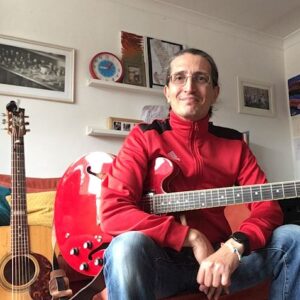
Hi All, my name is Francesco and I live in Portslade Village. I am a musician with over 30 years experience and I offer friendly and personalised guitar lessons for beginners and intermediate students in Portslade, very close to Brighton and Hove, UK. Students can learn both acoustic or electric guitar and I enjoy teaching them how to become independent in their musical journey, while enjoying the process and progressing with their skills. If you are interested in booking lessons please contact me through my email or facebook account. Qualifications: Grade 8 Acoustic - RGT - Distinction, Grade 8 Electric - RSL - Distinction
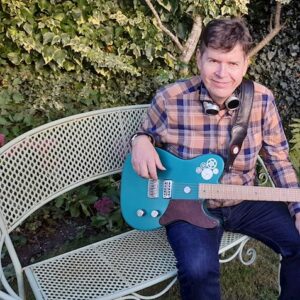
I begun teaching friends in 1989 and gradually built it up to a full time job from 1991. In the mid 90s I started teaching in schools and continue to teach privately and as a peripatetic. I teach all types of guitar: classical, acoustic and electric in many different styles. I also teach bass guitar, mandolin and ukulele. I have my own progressive courses that take players from beginner to advanced. Intermediate players can start at a level they are comfortable with a progress from there. As a musician I have played many different styles or electric and acoustic in bands, duos and solo. I have also done a lot of pit band work and enjoy the challenge of playing even more varied music.
About Guitar Lessons Brighton
Guitar lessons in Brighton are available in person, with online sessions also possible—ideal if you’re interested in flexible scheduling across the UK. The aim is to help you find a suitable local tutor and follow a clear plan similar to professional musicians, so you can achieve specific goals—whether you’re starting from scratch or working on song writing, learning music from your favourite band, alternate picking or building on existing skills.
Most students choose in-person lessons in Brighton, meeting at a local teaching space or (where available) at home. Online lessons are available as a secondary option for busy weeks.

Find professional teachers with clearer trust signals — and inquire in minutes.
Recently searched: guitar teacher Brighton
Guitar playing lessons in Brighton that fit real life
Guitar lessons tend to work best when they fit around day-to-day life in Brighton—work patterns, school runs, and short pockets of practice. Lessons are usually structured and goal-led, so you can track improvements in timing, sound, and confidence. A tutor can set out what to learn next (and why), rather than leaving you to piece things together from random videos—saving time and money. Whether you’re a complete beginner or returning after a break, the focus is on steady progress and durable technique.
Your guitar teacher: what to look for
A helpful guitar teacher goes beyond demonstrating chords. Many Brighton tutors tailor lessons to your goals, favourite genres, and learning style, and can spot technical issues early—posture, rhythm, and hand coordination—so they’re easier to fix. Expect a clear structure with small targets, plus essential technique checkpoints, time for songs, and creativity—so you can achieve progress you can hear. If you want to follow a recognised pathway, lessons in Brighton can also support graded exams such as RGT or Rockschool (and, in some cases, London College of Music routes).
In-person or online lessons For Acoustic & Electric Guitar
In Brighton, guitar lessons may be taught in a teacher’s studio, a local teaching space, or sometimes at home, depending on availability and logistics. Online lessons are also common via platforms like Zoom or Skype and can work well when travel or scheduling makes in-person sessions difficult. Either way, lessons typically include clear practice tasks, essential exercises, and feedback you can apply between sessions.
What you can learn: songs, technique, and musicianship
Brighton guitar lessons often combine songs with the fundamentals that make them sound solid. Beginners typically cover tuning, basic rhythm, open chords, simple strumming patterns, and clean chord changes. As you progress, you might add barre chords, fingerstyle, note reading, and fretboard knowledge. Many tutors also include music theory, songwriting, and improvisation so you can improvise with confidence, understand what you’re playing, and build independence.
A simple learning path from first chord to confident playing
Our teaching keeps momentum: fundamentals first, then real songs, then musical choices. We use weekly targets so students know exactly what to practise, what to listen for, and how to improve.
Learn tuning, posture, easy chords, and steady rhythm. We teach beginners to change chords cleanly and strum in time using short, daily practice.
Add songs, barre chords, fingerstyle, and cleaner tone. Your tutor corrects timing and hand tension, helping you play longer without fatigue.
Work on solos, improvisation, and style details like dynamics and phrasing—plus a few pro tricks for phrasing and timing under pressure. Prepare for playing with musicians, recording, or grade goals with structured feedback.
Starter setup for your first lessons
You don’t need a huge budget to start playing guitar, but the right setup removes friction and makes practice more comfortable from week one.
- Bring a guitar that holds tune; if you have your own guitar, we’ll check action, strings, and comfort, and suggest a basic setup.
- Keep a spare set of strings, a tuner, and a simple pick selection so broken strings or wrong gauge don’t interrupt practice.
- Set your guitar on a stand or wall hanger at home, so quick 10-minute sessions become part of your daily routine.
Styles and goals we teach
Choose a direction, then we’ll build the technique to match it. Lessons can blend styles, but we keep priorities clear so progress stays visible.
Start with simple chords, rhythm, and easy songs. We make learning fun, but we also build habits that prevent sloppy timing and buzzing notes.
Learn riffs, power chords, and tight strumming for rock and pop. We focus on timing, clean changes, and stage-ready confidence.
Develop chord vocabulary, rhythm precision, and basic improvisation. We teach practical theory so you can understand progressions and comp with better sound.
Improve right-hand control, reading notes, and tone. Classical technique supports fingerstyle playing on acoustic and helps develop calm, efficient movement.
Work on bends, vibrato, phrasing, and fretboard navigation along the neck. Build solos that fit the music, not just patterns.
Browse guitar lessons by location
Explore guitar teachers by city and region.
Popular cities for guitar lessons
Jump to a location page (instrument prefilled).
Other lessons in Brighton
Trust & safety
Parents and students should always feel confident asking about safeguarding, insurance, and lesson policies.
FAQs about guitar lessons in Brighton
A first lesson for beginners commonly covers the basics: how to hold the guitar, simple right- and left-hand setup, tuning, and a small amount of playable material straight away (often a simple riff or a couple of chords). You’ll usually leave with a short course-style practice plan focused on consistency and clear next steps.
Guitar lessons in Brighton are available for children and adults, from beginners to advanced players. There isn’t one best age to start—what matters most is having an instrument that fits and a practice routine that’s realistic.
Prices vary by tutor, location, and format. As a reference point, many tutors offer 30, 45, or 60 minute lessons, and some offer a discounted first session. The best approach is to compare a few local teachers based on experience, location, and whether you’re learning acoustic, classical, or electric.
Classical, acoustic, and electric are all common starting points. Classical guitars have nylon strings (often softer at first) and a wider fretboard; acoustic guitars have steel strings (often tougher initially) and can have a narrower fretboard; electric guitars typically have lower action and often feel easier to press, but usually require an amplifier to be heard properly. The right choice is the one that feels comfortable and supports what you want to play.
Daily practice is typically recommended, and shorter, more frequent sessions often work better than occasional long sessions. Fingertips usually harden over time, so early discomfort often reduces as you progress. Keeping the guitar accessible at home can make it easier to practise consistently.
Many Brighton tutors teach a mix of songs and supporting skills such as technique, ear training, and music theory. If you want a structured route, some teachers can support recognised guitar grades such as RGT or Rockschool, alongside practical playing.
Brighton has one of the UK’s strongest live music scenes, with a mix of grassroots venues and larger touring spaces that are ideal for hearing guitar music up close. Venues such as Concorde 2 regularly host touring bands and louder indie, rock, and alternative acts, while Brighton Dome provides a larger concert setting where you can hear arrangement, dynamics, and full-band production in detail. Smaller venues across the city also play an important role in developing new artists, so checking regular listings is one of the best ways to discover emerging guitar bands and stay connected to the local scene.
Brighton has a small but solid selection of independent music shops where you can try gear in person and get practical advice. One of the main specialist stores is Badlands Guitars, which offers electric and acoustic guitars, pedals, and accessories alongside setup guidance. For inspiration and a strong connection to the local music scene, Resident Music is a well-known independent record shop that regularly supports artists and hosts events, making it a useful place to stay connected to what is happening locally. For a wider range of instruments and equipment, many Brighton players also travel to nearby cities or order from established UK retailers once they know what they are looking for. If you are buying your first setup, it is worth asking about string gauge, basic setup, and essential accessories so the instrument feels comfortable from the start.
Brighton has produced and shaped a number of successful UK artists, particularly within indie, rock, and electronic music. The Kooks formed in Brighton and became one of the defining indie bands of the mid-2000s, with guitar-driven songs that are widely used in lessons for rhythm and chord work. Royal Blood also have strong Brighton roots, and their music is often studied for its powerful, stripped-back arrangements and tight rhythm playing. The city is also closely associated with Fatboy Slim, who helped shape the UK electronic scene while remaining strongly connected to Brighton’s live culture and events. For guitar students, Brighton’s scene is particularly useful because it blends live band performance with modern production, making it a strong place to study rhythm, tone, and how guitar fits into contemporary music.
Keeping your guitar on a stand or wall-hanger can make it easier to practise and help prevent damage from being left in awkward places. It’s also useful to keep a spare set of strings available so a broken string doesn’t stop you practising. Wiping strings after playing and storing the guitar away from radiators/direct sun can also help keep it stable—small habits that add up over the rest of your learning.