
Welcome to
Guitar Lessons Darlington
In-person first, with clear weekly goals: technique, songs, and music theory that makes your playing feel easy and confident.
Our Guitar Teachers in Darlington
Browse local guitar teachers to get started, or search again above to find the nearest guitar teacher to you.
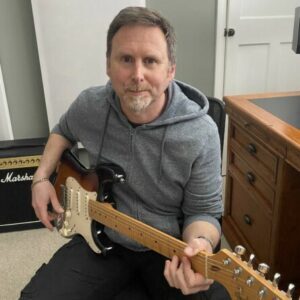
Hello, my name is David and I am a Darlington based guitar tutor and have played the guitar for over 30 years. I have a wealth of experience in music having gained a BaHons in music from Brunel University and more recently a Level 3 Award in Education and Training (QCF). I have taught in the school system both in London and the Midlands for the Richmond Music Trust, Richmond Adult College, Arts in Education and privately for my own company DAJ Music Production. I have a passion for teaching guitar to all ages and abilities, to help students across Leicester to develop their guitar playing ability and to give people a fun learning experience. Alongside my experience as a guitar teacher, I have around 30 years experience in the music industry, gigging and touring during the 1990s “Britpop” era. Playing as a session musician and in my own bands writing, producing and recording. More recently I have been composing for the TV and film industry from my studios firstly in London and now the Midlands where I write/produce and records for all forms of media specialising in TV theme and incidental music packages for production companies. Published through Connexion Media Group and Universal Music Publishing with credits all over the world I have gained a reputation as a versatile musician and composer. Music Qualifications & Achievements: Degree in Music from Brunel University Teaching certificate level 5

I am a qualified teacher who graduated from Manchester in 1984, having studied classical guitar and piano. With 40 year's professional teaching and performing experience, I have worked with students and adults at all levels and ages, from primary school classes to degree level. My last teaching post before focussing upon private tuition was as Head of Music at Northallerton College in North Yorkshire, where I taught Music at G.C.S.E level and both Music, and Music Technology, at A Level. I teach guitar (classical, electric, acoustic and bass) and piano/keyboard, as well as theory, composition/song-writing and history of music. I help other teachers' students prepare for exams, and I am available to practise with and play as an accompanist for any students in their exams. My teaching is very much based upon development from where the student is at, rather than follow a pre-determined set of lessons. My lessons are individually tailored to enable all of my students to understand, learn and progress. Music, and teaching music have always been at the core of my professional life, and I still retain my enthusiasm for developing that same shared interest with others. To put it simply, I love music, and teaching it has been and still is my life-long passion!

Qualifications: MA by Research in Interactive Media, Professional Graduate Certificate in Education, First Class BSc (hons) in Music Technology, Rock School Electric Guitar Grade 8, Rock School Bass Guitar Grade 8
About Guitar Lessons Darlington
Guitar lessons in Darlington with structured, goal-led teaching. Lessons are available in person or online, with flexible options to suit busy schedules—and you can also enquire about piano, singing, and band skills if you want broader musicianship.
Most Guitar Lessons Darlington sessions run in person at a local teaching space; limited local travel may be possible by arrangement. Online lessons are available when needed.

Find professional teachers with clearer trust signals — and inquire in minutes.
Find the right teacher for your goals
Guitar lessons in Darlington that feel structured and enjoyable
The aim of lessons is to help you build confidence and technique with a clear, well-structured plan that’s tailored to your goals—because the small details that matter (hand position, timing, and how you practise) add up quickly. Students often describe lessons as friendly, supportive, and easy to follow. Tuition is available for children and adults (including kids learning alongside a parent), from complete beginners through to intermediate and advanced players. Lessons commonly cover chord fluency, rhythm, and strumming patterns, with practical guidance on what to practise between sessions so progress feels steady.
Choosing a guitar teacher in Darlington: what to check first
When comparing guitar teachers in Darlington, look for someone who can tailor lessons to your goals, keep sessions interactive, and give you a clear plan for practice so you don’t get stuck—an amazing guitar teacher will also explain *why* things matter, so you can self-correct between sessions. It’s also sensible to check practical details before you begin, including cancellation policies and any travel requirements. Word-of-mouth recommendations can be helpful, and it’s worth reading more than one review where possible. Many local tutors draw on years of playing experience as a working guitarist, alongside a track record of helping students progress.
Lesson formats: one-to-one, group lessons, and online guitar lessons
Guitar lessons in Darlington are available one-to-one (private lessons) or in groups, depending on how you prefer to learn. One-to-one lessons offer the most personalised approach, while group lessons suit students who enjoy a more collaborative environment. You can choose in-person lessons for face-to-face feedback and hands-on support, or online lessons (often via Zoom) for convenience. For many students, online guitar lessons can be just as effective as in-person, especially when schedules are tight.
Guitar lesson options: acoustic guitar, electric, classical (and bass)
Lessons can be tailored around the instrument and style you want to play, whether that’s acoustic, electric, or classical guitar—or even adding supportive piano parts for songwriting and arranging. Many tutors also offer bass lessons. Your teacher can shape sessions around your goals and preferred songs and styles (rock, pop, folk, or jazz), while building the core guitar skills that transfer across genres—timing, technique, and confidence.
A simple, proven way to learn guitar
We keep guitar lessons focused: play more, understand what you’re doing, and build habits that lead to reliable progress on guitar or bass.
Set up posture, tuning, and timing. Learn core chords, simple riffs, and a first song, plus basic music theory for counting and chord functions.
Improve chord changes, strumming, and picking accuracy. Add fingerstyle or lead basics, expand songs, and use music theory to understand keys and patterns.
Develop tone, dynamics, and consistency at tempo. Build a setlist or grade pieces, apply music theory to the fretboard, and practise performing with confidence.
Starter setup for your first lessons
You don’t need an expensive instrument to begin. We’ll help you choose gear that supports comfort, good sound, and steady practice at home.
- Bring your own guitar if you have one, tuned and with a spare pick; we’ll check string height and comfort for easier fretting.
- A simple clip-on tuner, a strap for electric or acoustic, and a small notebook help you practise between lessons with clear weekly targets.
- If you’re buying, choose a comfortable acoustic or electric, plus a basic amp and cable; we’ll recommend sizes for children and adults.
Styles and goals we teach
Our teachers teach the music you’re interested in, while building transferable skills: time, technique, ear training, and music theory that supports every style.
Start with the basics: tuning, posture, simple chords, and rhythm. Lessons stay practical, with quick wins on songs and clear practice tasks.
Build tight rhythm, clean chord changes, and lead technique. We cover riffs, power chords, muting, bends, and getting a reliable sound from your gear.
Improve strumming feel, dynamics, and chord vocabulary. Add fingerstyle patterns and simple theory so you can change keys and create your own arrangements.
Learn bass groove, timekeeping, and fretboard patterns. Lessons focus on locking with drums, clean note length, and building lines that support the song.
Develop classical technique and reading-friendly habits. We choose repertoire at the right level and use music theory to understand harmony, phrasing, and tone.
Browse guitar lessons by location
Explore guitar teachers by city and region.
Nearby locations to Darlington
Try a nearby area if availability is limited.
Trust & safety
Parents and students should always feel confident asking about safeguarding, insurance, and lesson policies.
FAQs about guitar lessons in Darlington
Start with a teacher who can give you a clear week‑to‑week plan (chords, rhythm, strumming, simple songs) and help you build good habits from day one—this is the fastest way to learn guitar without guessing. A good teacher will recommend aiming for short, regular practice (even 10–20 minutes) and ask your tutor to track progress with recordings, song targets, and technique checkpoints.
Yes—many Darlington tutors teach both acoustic and electric, and it’s common to switch between them. A good plan keeps the fundamentals consistent (timing, fretting, picking/strumming, chord changes) while adapting tone, technique, sight reading, and repertoire to whichever instrument you’re focusing on that week. Above all else it has to be fun.
Not always—some teachers can provide a guitar for use during the lesson at first (useful for kids or if you’re not ready to buy). If you’re planning to practise at home (recommended), it’s worth getting your own instrument fairly early so your hands get used to a consistent setup. Your tutor can advise on sizing, action/comfort, and what to avoid when buying. More students these days are staring on acoustic guitar.
Some tutors do. If bass is your main goal, ask whether lessons cover core bass skills (timing, fingerstyle/pick technique, muting, groove, and learning lines by ear) as well as practical band skills like locking with a drummer and building reliable parts for songs. It's important to learn music that you like to listen to.
Both exist in and around Darlington. One‑to‑one is usually fastest for personalised feedback and fixing technique. Group lessons can be great for confidence, rhythm, and learning to play with others. Many players do a mix: 1‑to‑1 for progress plus occasional group/jam settings for experience. It's even great to play with other musicians, whether that be drums, guitar, trumpet, saxophone, clarinet or violin.
Yes. Good tutors keep theory practical by tying it directly to songs, riffs, improvisation and technique. If you’re aiming for exams (e.g., Rockschool or Trinity), ask for a structured syllabus plan plus weekly playing goals so the theory supports what you can actually play.
Check: (1) how lessons are structured (warm‑ups, technique, songs, goals), (2) cancellation/rescheduling policy, (3) whether they teach the styles you actually want to play or what your son/daughter wants to play, (4) practicalities like location, parking/public transport, and whether they can help you choose/setup your instrument, and (5) what review feedback says about communication, progress, and reliability. Check out our website for more information
Darlington has limited dedicated guitar retail, so most players combine local essentials with nearby specialist shops for a wider range. For in-person advice, accessories, and general music support, a good starting point is The Forum Music Centre, which is a central hub for local musicians and can often point you toward trusted repairers and teachers. For buying guitars, amps, and pedals with proper hands-on comparison, many Darlington players travel to nearby cities such as Newcastle or Leeds where larger specialist music shops are available. If you already have a guitar, it’s often worth prioritising a professional setup first—adjusting action, intonation, and strings can make a bigger difference to playability than upgrading gear.
Darlington itself has a smaller footprint in terms of globally recognised artists, but it sits within a wider North East music ecosystem that has produced major UK acts and continues to support emerging musicians. For genuinely local activity, The Forum Music Centre plays a key role in developing artists, hosting gigs, and supporting youth and community music. Larger nearby venues such as Darlington Hippodrome also bring touring artists into the town and help connect local audiences with the wider UK scene. For students, the practical takeaway is that Darlington’s strength is its access to the wider North East circuit—many musicians develop locally, then expand into nearby cities for gigs, collaborations, and recording opportunities.