
Welcome to
Guitar lessons Cambridge
In-person first across Cambridge, with clear weekly targets for technique, timing, and confident music performance; online lessons available when travel is tricky.
Our Guitar Teachers in Cambridge
Browse local guitar teachers to get started, or search again above to find the nearest guitar teacher to you.

I’ve been teaching, performing and writing music for over 25 years. Music has always been central to my life — not just as a skill, but as a way of connecting, expressing and building confidence. Layston Music grew from a desire to share that experience in a way that feels supportive, inclusive and genuinely life-enhancing. I hold formal music qualifications and have worked professionally as a singer and songwriter alongside my teaching career. Over the past two decades, I’ve taught hundreds of students of all ages — from young beginners to developing performers — supporting them through exams, performances, auditions and personal creative growth. My experience as a working musician informs everything I teach. Technique matters — but so does expression, confidence and enjoyment. Alongside my music career, I have over 10 years of experience working with neurodivergent children and adults. I understand that no two learners are the same. My teaching approach is flexible, patient and responsive — creating lessons that feel structured yet calm, encouraging yet appropriately challenging. I believe: Music education should build confidence, not pressure.Singing should feel liberating, not intimidating.Creativity belongs to everyone.Community matters. Whether in a one-to-one lesson or a room full of voices, my aim is always to create a space where people feel safe enough to grow. Professional Experience & Approach With over 20 years of teaching experience, my work spans piano and singing lessons, specialist vocal coaching and community singing leadership. I’ve worked with hundreds of students — from young beginners to experienced performers — supporting musical development in a way that builds both skill and confidence. My background as a professional singer and songwriter deeply informs how I teach: technique matters, but so do expression, creativity and enjoyment. Tailored, Supportive Teaching Every student is different — and no two lessons look exactly the same. I create structured, encouraging learning environments where students can progress at a steady pace while feeling safe to explore and grow. Whether preparing for exams, developing performance skills or learning purely for enjoyment, lessons are adapted to suit the individual. For over a decade, I have worked extensively with neurodivergent children and adults, as well as those experiencing anxiety and mental health challenges. This experience has shaped a calm, flexible and empathetic teaching style that prioritises wellbeing alongside progress. Vocal Coaching & Creative Development Alongside children’s lessons, I work with teens and adults developing their voice more deeply — supporting healthy vocal technique, performance confidence, songwriting and artistic identity. My approach combines professional vocal training with real-world experience as a working musician, offering guidance that is both technically sound and creatively empowering. Community & Connection In recent years, my work has expanded into community singing through The Singing Circle — creating welcoming spaces where adults can reconnect with their voice, sing in harmony and experience the powerful wellbeing benefits of shared music-making. Whether teaching one-to-one or leading a room full of voices, my aim is always the same: To create a space where people feel confident, supported and inspired through music.
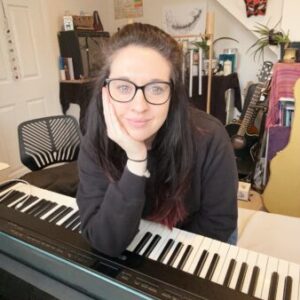
I’m Talena, a professional Vocal Coach, Singing and Piano Teacher with more than 20 years’ experience helping children, adults and professional musicians develop their skills, confidence and enjoyment of music. I run Layston Music and teach from my home studio near Royston, on the Cambridgeshire/Hertfordshire border, as well as offering online lessons. My teaching is friendly, supportive and tailored to the individual. I work with complete beginners through to experienced musicians, and lessons can be structured towards exams and qualifications or simply around the music and skills you would genuinely like to learn. Singing Lessons & Vocal Coaching As a Vocal Coach, I specialise in developing strong, reliable vocal technique – particularly for singers who perform regularly, gig, record or tour. I work with singers across pop, rock, alternative, musical theatre and contemporary styles, helping them understand how their voice works and how to use it confidently and sustainably. Vocal lessons may include breath management, resonance and placement, vocal registers, bridging, range development, stamina, projection, agility, belt, stylistic choices, performance preparation and vocal health. For experienced performers, we can also look at set pacing, managing vocal fatigue, preparing for gigs or recording sessions, and building a technique that works consistently under pressure. You do not need to be a professional singer to benefit from good technique, though! I also love working with people who have always wanted to sing but perhaps lack confidence, have been told in the past that they “can’t sing”, or simply want a supportive place to explore their voice. Piano & Musicianship Lessons My piano teaching combines learning to play music with developing a broader understanding of musicianship. Depending on the student, lessons might include reading notation, chords, scales, rhythm, aural skills, improvisation, music theory, songwriting and understanding how music is put together. I teach beginners through to more advanced students and can support learners working towards RSL Rockschool examinations. However, exams are always a choice rather than the sole purpose of learning. For some students, working towards a grade provides fantastic motivation; for others, learning favourite songs, composing music or developing confidence at the piano is much more valuable. I want students to become musicians rather than simply learning how to reproduce pieces for an exam. Children, Young People & Neurodiversity A large part of my work involves supporting children and young people, including students with autism, ADHD, anxiety, SEND and other additional needs. Music lessons do not have to look the same for everybody. I take time to understand how each student learns, communicates and processes information, and lessons can be adapted accordingly. Some students thrive with a clear structure and measurable goals; others need more flexibility, creativity, movement or time to explore. Alongside musical development, lessons can help young people build confidence, independence, self-expression and a positive relationship with learning. I particularly enjoy using singing, piano, songwriting and creative music-making to give students a safe way to express themselves. Parents are very welcome to be part of the learning process where this helps their child feel comfortable and supported. Qualifications & Experience My background includes an MA in Vocal Performance, a First-Class BA (Hons), Grade 8 qualifications in both Singing and Piano, and extensive experience teaching and coaching musicians of different ages and abilities. Over the years I have worked in private tuition, music education and professional vocal coaching, including working with singers preparing for performances, recording and touring. I have also worked extensively with children and young people with SEND and mental health difficulties. I regularly prepare students for RSL Rockschool examinations in both singing and piano, while also supporting students who prefer a non-exam route. What Are Lessons Like? There is no one-size-fits-all Layston Music lesson. Your lessons might involve: Singing and vocal technique Piano and keyboard skills Music reading and notation Music theory Chords and harmony Aural skills Rhythm and timing Improvisation Songwriting and composition Performance skills Exam preparation Audition or gig preparation Building practice strategies Developing musical confidence Most importantly, I want students to understand why something works rather than simply being told what to do. Whether you are looking for your child’s first music teacher, returning to music after many years away, preparing for a Rockschool exam, or you are an experienced singer wanting a more dependable technique for performing and touring, lessons are built around where you are now and where you would like your music to take you. Music should challenge us, but it should also be something we look forward to. My aim is to create a relaxed, encouraging environment where students feel comfortable asking questions, trying things, making mistakes and gradually becoming confident, independent musicians.

I have been playing guitar for several years and started teaching in 2022. I am available primarily for acoustic and electric guitar tuition and happy to follow the RSL grade syllabus or just play for fun. I am also able to help with music production (Logic and GarageBand) and music theory. I have a full teaching set up at home for in person lessons but can also offer online lessons if this is preferred. Qualifications: RSL Electric Guitar - Grade 8 (Merit), RSL Popular Music Theory - Grade 8, RSL Acoustic Guitar - Grade 7 (Distinction), GCSE Music - Grade 9

Chris Webb has over 20 years experience teaching guitar, and over 20 years experience in the music industry. He has released studio albums and toured with Symphonic metal band Biomechanical. Chris also has extensive studio experience, both in a band scenario, and as a session musician, meaning he has a wealth of knowledge and experience to share with students.
About Guitar lessons Cambridge
Cambridge offers a range of ways to learn guitar, from local teachers and studios to flexible online lessons—with clear guidance whether you’re coming from piano or violin, or picking up guitar for the first time. Options include beginner-friendly tuition, lessons for electric, acoustic, classical and bass guitar, and support with music theory, exam preparation, and the wider subject of musicianship. For eligible students, the Centre for Music Performance also provides heavily-subsidised one-to-one tuition, free group classes, and instrument loans where needed.
We prioritise in-person lessons in Cambridge, with home-studio or local travel options depending on timetables; online lessons are available as a backup.

Find professional teachers with clearer trust signals — and inquire in minutes.
Looking for a Cambridge guitar teacher?
Lessons in Cambridge: common options
In Cambridge, guitar lesson options include private in-home tutors, dedicated music studios, and online sessions—so you can find the right fit for your schedule and learning style. Lessons are available for acoustic, electric, classical and bass guitar, and can be suitable for beginners through advanced players—including those returning after years away from music. Many teachers offer flexible scheduling, and some provide targeted coaching for goals such as GCSE/A-Level performances or grade exams.
Electric lessons: typical focus areas
Electric guitar lessons in Cambridge often cover timing, picking and muting, plus core techniques such as bends and vibrato—in addition to tone, phrasing, and musical control. Some tutors follow graded pathways (for example RockSchool/RSL), while others build lessons around contemporary styles including rock, blues and jazz. Many programmes can be adapted to your level and the music you want to play.
Classical and acoustic fingerstyle in Cambridge
Classical and acoustic guitar tuition commonly focuses on right-hand technique, posture, tone control and repertoire building; over the years, this foundation helps you improve faster and play with confidence. In Cambridge there are also intensive workshop options (such as short, immersive courses) that may cover classical, Spanish and acoustic fingerstyle playing, alongside preparation for grade exams where relevant.
Music theory alongside lessons
Some Cambridge tutors place a strong emphasis on music theory as part of practical playing—covering rhythm, chords, scales and how to understand the fretboard, plus the information you need to practise efficiently between lessons. This can be especially helpful for younger learners and for students working towards school performances or graded assessments.
A simple learning path (what to do first)
Our guitar teachers keep lessons structured so students in Cambridge can measure progress week to week, whatever their ages or abilities—ideal if you’re building skills as a well-rounded musician.
Dial in tuning, posture, and timing. Learn core open chords, simple strumming, and single-note reading, supported by basic music theory for the fretboard.
Add barre chords, articulation, and consistent rhythm. Introduce acoustic or electric guitar tone basics, plus scales for improvising in blues and rock.
Prepare complete pieces for music performance: intros, endings, and dynamics—sometimes arranging parts that borrow ideas from piano accompaniment. Refine classical guitar or bass guitar parts, and practise with backing tracks or ensembles.
Starter setup for your first lesson
Bring whatever guitar you have; we’ll help you get it playable and choose sensible tuition goals from day one.
- Guitar setup: a reliable tuner, spare strings, and a pick variety; we’ll check action and hand position to avoid early strain.
- For electric guitar: a small practice amp and lead; for acoustic or classical guitar, a footstool or support helps posture.
- A notebook or app for practice notes, plus a metronome; this keeps lessons focused and makes progress easy to track.
Styles and goals we teach
We match guitar lessons to your taste while keeping technique and musicianship consistent across ages and abilities.
Rhythm guitar, power chords, lead phrasing, and tight timing for gigs. Great for electric guitar students aiming to join bands.
Classical guitar reading, tone, and finger independence, plus acoustic fingerstyle patterns that translate well into expressive solo playing.
Chord extensions, swing feel, and simple improvisation. We connect music theory to the fretboard so you can comp and solo confidently.
Bass guitar tuition covers groove, note choice, and locking with drums. Ideal for students supporting ensembles and music performance work.
Structured practice plans, performance polish, and feedback on tone and accuracy. Useful for Cambridge students with assessed performances.
Browse guitar lessons by location
Explore guitar teachers by city and region.
Nearby locations to Cambridge
Try a nearby area if availability is limited.
Other lessons in Cambridge
Trust & safety
Parents and students should always feel confident asking about safeguarding, insurance, and lesson policies.
FAQs about guitar lessons in Cambridge
Yes. Cambridge has beginner-friendly options ranging from private tutors to community programmes, and we hope this guide makes it easier to choose the right starting point. A good starting point is the Centre for Music Performance (often called the Cambridge MP), which provides access to professional teachers and structured learning. You can also find private tutors, studios and adult education courses that start with essentials (tuning, simple chords, rhythm and easy songs) and build from there.
Acoustic lessons often focus on strumming, accompaniment and basic fingerpicking (a great crossover if you have prior experience on piano or violin). Electric lessons commonly add technique and tone skills such as muting, bends and amp/effects basics, and may follow graded pathways (e.g., Rockschool/RSL) with some teachers. Classical guitar lessons typically emphasise nylon‑string technique, posture, reading music and classical repertoire, and can support grade exam preparation.
Yes. In Cambridge, many tutors and studios offer bass guitar alongside electric, acoustic and/or classical guitar—availability varies by teacher, so it’s worth asking when you enquire.
Cambridge guitar teachers commonly teach children, teens and adults—from complete beginners to advanced players. Many also offer online lessons, which can widen the choice of teachers and time slots.
Pricing varies by teacher, lesson length and format. As a rough guide, private lessons in Cambridge are often in the ~£20–£40 per hour range, with some 30‑minute options and some higher-priced specialist coaching. Group classes and adult learning courses may be priced differently (e.g., term fees). Always check what’s included (materials, exam prep, performance opportunities, cancellation policy).
Yes. The Centre for Music Performance in Cambridge runs subsidised tuition initiatives at times, which may include bursaries, free group classes and instrument loans (depending on current funding and eligibility). It’s best to check their current programmes and application criteria directly.
Yes. Online lessons can be a flexible way to learn from home and fit practice around work or study—especially if you’re balancing school subjects or a busy week in Cambridge. Many tutors offer evening slots, shorter lessons, or rotating schedules, and can tailor sessions to goals like rhythm guitar, fingerstyle or exam preparation.
Yes. Many Cambridge tutors support GCSE/A‑Level performance coaching and grade exam preparation (including electric guitar graded pathways and classical syllabuses). When enquiring, mention your exam board/syllabus and deadlines so the teacher can plan repertoire, technique and mock performances.
Yes. Cambridge has an active and well-connected music community supported by students, local musicians, and independent venues. Open mic nights, jam sessions, and informal groups are regularly organised across the city, particularly around venues such as The Portland Arms and Cambridge Junction. These environments are often the most practical way to meet other players, gain live experience, and build confidence. Because communities in Cambridge tend to be fluid rather than formal clubs, the best way to get involved is through local venue listings, social updates, and recommendations from teachers or other musicians.
Cambridge has limited dedicated guitar retailers, so most players rely on a combination of smaller local shops, nearby cities, and independent technicians. For basic accessories such as strings and cables, local music shops may carry essential items, but availability can vary. For a wider choice of guitars, pedals, and amplifiers, many players travel to larger stores in nearby cities such as London, where it is easier to compare instruments in person and get detailed advice before buying. For setups and repairs, independent guitar technicians are widely used across the Cambridge area. A teacher is usually the best source for a trusted recommendation, and a good setup can make a significant difference to playability and overall feel.
Cambridge has strong links to several successful modern artists, particularly through its university and student music scene. Everything Everything formed in Cambridge while the members were studying, and their music is often studied for rhythm complexity, arrangement, and modern guitar textures. Clean Bandit also formed in Cambridge, blending classical training with electronic and pop production, which makes them a useful reference for understanding how guitar and instrumentation fit into contemporary arrangements. Mumford & Sons have connections to the wider Cambridge and surrounding folk scene, particularly through early collaborations and musical networks in the region. For students, Cambridge is a strong example of how a student-led music scene can produce globally successful artists, making it a useful place to study songwriting, collaboration, and modern band dynamics.