
In 1965, a young Eric Clapton was making huge waves on the London music scene. First as a member of the Yardbirds, then in 1965 as a member of John Mayall and The Bluesbreakers. It was in 1965 that Eric Clapton presented to the world, one of the most coveted and desired guitar tones of all time.
During his stint with the Yardbirds he was playing a Fender Telecaster through a Vox AC30, as was the norm at the time, but for his tenure with John Mayall, he needed something with a bit more edge.
This is a very simple rig. It really shows off the importance of knowing just how to manipulate your guitar to get the best tone from your setup. Here is the Eric Clapton guitar rig from the Bluesbreakers era.
Pedals
There was only one pedal in Clapton's arsenal at this point in time.
- Dallas Rangemaster
Dallas Rangemaster
In 1965 Clapton was using a Dallas Rangemaster, though this is not confirmed, there is a lot of evidence pointing to this. It was a unit used by most guitar players at the time in order to push the front end of an amplifier.
The assumption is that Eric would have left it on at all times as a boost to achieve additional amp breakup and then perform any volume changes with this guitars volume knob. These pedals were used to add some additional top end bite to existing amplifier tones. The original units weren't actually pedals as such. They were designed to be sat ontop of an amplifier and left on at all times. There is no photographic evidence confirming Clapton ever used one, but it is assumed based on the knowledge that everyone at the time was using one for the same purpose.
Guitars
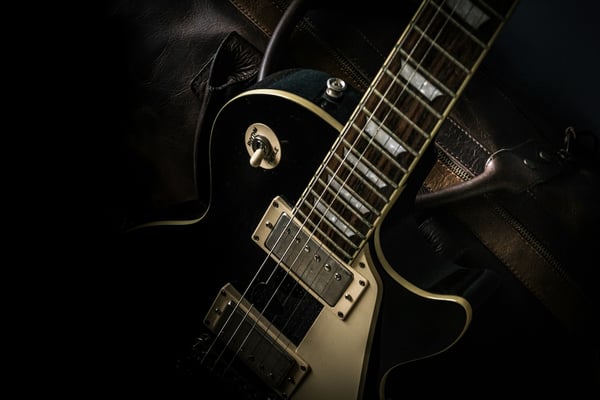
Clapton was in search of a more aggressive tone at this point in his career. He turned to a single guitar to create this. The Gibson Les Paul.
1960 Gibson Les Paul
His main guitar in the Bluesbreakers era was a Gibson Les Paul. The exact date of this is unknown, but it is believed to be a 1960 model. There are various reports that it is a '59 but a few specs that Clapton has reeled off over the years, such as the slim neck and tall volume knobs, point to it being a 1960 model. The necks in 1959 were much fatter. The slim neck was introduced in 1960.
Eric wanted to sound like his idol Freddie King, who was a known Les Paul user. He had already dabbled with Gibson via his 1964 Gibson ES-335, though it is not known if this guitar was used at all in the Bluesbreakers era.
The Les Paul that Clapton used has become known as the "Beano" Les Paul, and after being seen on the cover of the Beano album, sales rocketed and demand for Sunburst Les Pauls rose again, 5 years after Gibson saw a decline in sales. The current whereabouts of this guitar are unknown. It was stolen from Eric in the 1960s and it's location has remained a mystery ever since.
Amplifiers and Cabinets
Marshall "Bluesbreaker" 1962 Combo
The Marshall JTM-45 had been seen all over stages with some of the biggest names at that time. The powerful head driving a multitude of 4x12 speaker cabinets was a standard sight in rock. Eric approached Jim Marshall with a proposition to downsize this tone into a package that would "Fit into the boot of the car". Jim Marshall credits Clapton with being mostly responsible for Marshall introducing a combo amplifier to their line.
By the time the band recorded the Beano album, Jim Marshall had designed the MkII of this amp which contained an upgraded Celstion speaker with a heavier magnet than the previous version. This was a KT66 tune driven amp that had a loud but very clear tone with a lot of sustain. Clapton used to run the amp very loud to get his signature breakup tone from this era and he would use his guitars volume and tone to clean up the overall signal for quieter passages. He would turn the guitar down to 7 or 8 when playing rhythm and use the volume pot on the guitar to push it to 10 for leads.
Sources: