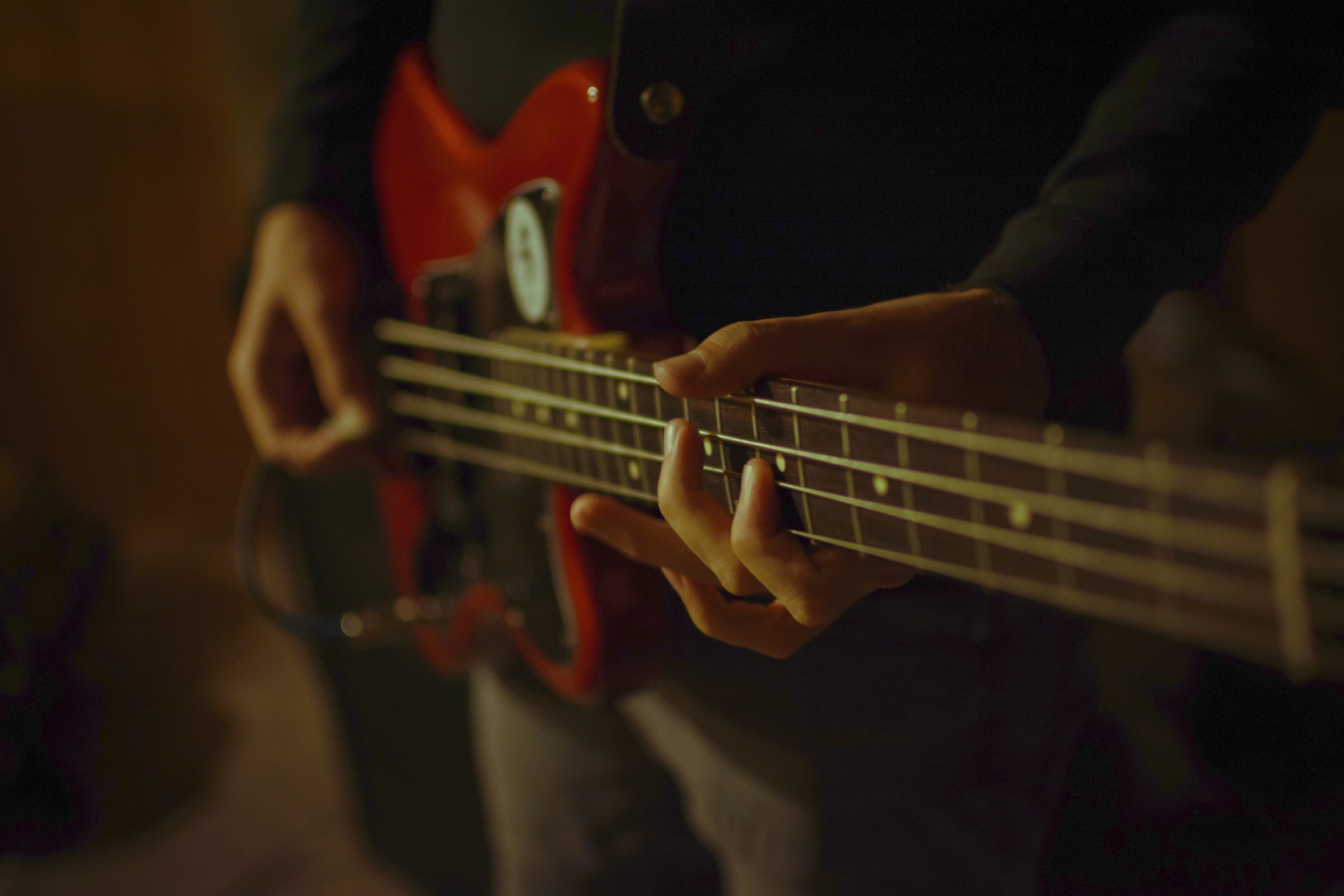

Welcome to
Online bass lessons
Supportive bass guitar lessons with a structured program for groove, rock, and confident playing.
Featured online bass teachers
Browse bass guitar lessons from teachers with clear programs, practical courses, and direct feedback.
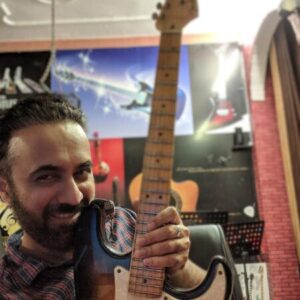
I am Suchait, a guitar instructor, performer, and mentor, with over 20 years of professional experience. I am the founder and lead instructor of Jazzelinn Guitar School, where I have trained over 1,000 students globally across all levels. I specialize in Rock, Metal, Fingerstyle, Blues, Pop, Bollywood, and misc. genres, and I prepare students for both Trinity Rock & Pop and Rockschool UK graded examinations. I hold Rockschool UK Grade 8 (Electric Guitar) and have extensive experience in teaching structured curricula, technique development, music theory, and performance training. My teaching approach blends discipline, creativity, and personalized lesson planning for each student, whether beginner or advanced. My student base spans the US, UK, Europe, Middle East, and Asia, Australia, Canada, and I conduct fully online, high-quality 1-on-1 lessons using professional-grade audio/video equipment. Many of my students consistently achieve distinctions in international grade exams. I believe in personalized, student-centered learning that balances technical skill development with the joy of playing music. Each lesson is tailored to the student's goals, whether they want to play for fun, prepare for exams, or pursue music professionally. I am here to connect with trainees who want serious, skill-oriented guitar training in contemporary and modern styles. I bring long-term experience, strong communication, a global track record, and a dedicated teaching environment. Teaching Style: My teaching style is student-centered and adaptive. I focus on understanding each student's musical goals, learning pace, and interests to create personalized lesson plans. I emphasize proper technique from the beginning while keeping lessons engaging and enjoyable. I use a structured approach that covers essential skills—chord progressions, rhythm, scales, music theory, and song repertoire—while allowing flexibility to explore the styles students are most passionate about, whether that's Rock, Metal, Fingerstyle, Blues, Pop, or Bollywood music. I believe in building confidence through progressive challenges, celebrating small wins, and maintaining clear communication. My lessons blend technical development with practical application, so students can quickly start playing songs they love while developing strong foundational skills for long-term growth.
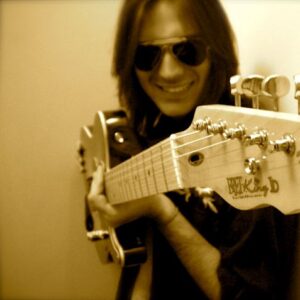
I'm Andy Basiola, I'm a guitar teacher and guitarist with over 20 years of experience, based in Acton, London. I offer personalised guitar tuition tailored to suit everyone from complete beginners to advanced players. My approach focuses on fostering a love for music while honing your skills in a friendly and encouraging environment. Whether you are picking up a guitar for the first time or looking to refine your technique, my lessons are designed to meet your unique goals and musical interests. Don't hesitate to get in touch and start your musical journey today!

Hello – Adam here! I am a self-taught professional guitarist and guitar teacher with a strong belief in music being a fundamental method of self-expression and communication. I reflect this in my teaching style by allowing students the creative space to explore the instrument and its capabilities, and in doing so help them cultivate a love of the instrument and find their own voice. Music Qualifications & Achievements: I started teaching myself at age 15, and began performing professionally at age 18. I also hold: BSc in Sound Technology & Digital Music Grade 8 Guitar with Distinction

Hi there, my name is Rob Mills, former guitarist of famous classic rock band Diamond Head! I have done hundreds of amazing shows and festivals including a European tour supporting Megadeth! I have been teaching guitar students and taking them to rockstar level for the past 20 years, one of my most famous students is Adam Zindani of Welsh rock band Stereophonics! If you want to take your playing to levels you never could imagine then please get in touch! Music Qualifications & Achievements: Played on the 2006 studio album All will be revealed by Diamond Head! Appeared on the 2006 live DVD ‘To the devil his due’ by Diamond Head! 23 date tour in 2005 supporting thrash legends Megadeth! Wacken festival appearance in 2003 to over 25,000 fans! Bachelor of Arts in Music Grade 5 music theory Also available now- SPEED MECHANICS ELITE LEVEL GUITARIST coaching program! A two-month intensive one-to-one with a free PDF with nearly two hundred exercises to totally transform your guitar technique!! Drop me a message now to find out more!!!
Inspired Sounds : Guitar, Bass, Ukulele Tuition & Audio Production Offering Award winning music tuition services in a relaxed and friendly atmosphere, based at a studio room in Newburgh, Fife. Online lessons via video conferencing app Zoom are also available worldwide. Contact Us at Inspired Sounds for all your Guitar, Bass or Ukulele lesson needs. Private tuition in Guitar, Bass and Ukulele 5 days a week. Beginner, to advanced students, of all ages welcome. Over 30 years of teaching experience. Member of Musicians Union. Member of PVG scheme with Disclosure Scotland. Award for "ThreeBestRated Music Schools in Fife" for 2025 and 2026 (see website for details/badge) UK Enterprise Award "Best Guitar Tuition Enterprise 2026 - Fife" (see website for details/badge) Whether learning your favourite songs to play along to, or studying for a nationally recognised qualification, lessons are tailored to suit individual needs. Independently verified as a private music teacher, backed by RSL Awards (Rockschool) for demonstrating the requisite standards in safeguarding, professional conduct, and completing a teacher development course (see website for certificate) Member of the Registry of Guitar Tutors, which allows SQA/Ofqual, accredited graded courses/exams to be taken, provided and regulated by the London College of Music. (see RGT for further information). I also teach Rockschool and Trinity Rock and Pop Syllabus for students wishing to take these exams. Initial stage to Grade 8 level is available. I have a 100% pass rate for the hundreds of students who have taken graded exams. Tab/standard notation reading, rhythm, improvisation, fingerstyle as well as guitar technique and music theory are taught, as well as most contemporary musical styles from jazz/blues to rock/pop. Help with composition/arrangement can also be provided if interested in songwriting, or help with High School/Further education syllabus... Project studio recording facilities available to record first demo/E.P. Available for students, as well as budding singers, instrumentalists etc. Whether starting out, or experienced, we will tailor the recording experience to suit your needs with particular instruments/backing tracks recorded on request... (see website for more details) Over 30 years teaching and recording experience. Teaching and recording is based from a private studio in Newburgh, Fife. (Near Cupar, Abernethy, Bridge of Earn, Perth, Auchtermuchty, Strathmiglo, Falkland, Milnathort, Kinross etc.) Online lessons are also available, via Zoom video conferencing app for those further afield, or if preferable. Enhanced disclosure approved by Fife council, and added to PVG scheme on 19/4/22. Get in touch today - Who knows, you might be the next Jimi Hendrix!

I am a classical guitarist from Liverpool who has been teaching guitar and music theory for over three years since graduation in 2016. I am capable of delivering electric guitar, bass guitar, ukulele, music theory and classical guitar lessons via Zoom or in person. I graduated from Liverpool Hope University with a 2:1 and went self-employed in November 2019 running a music tuition business. I have been performing in a rock band under various names since I was 14 and this is something I still do to this day. I am also a guitarist for hire and am capable of performing weddings, funerals, events, restaurants, fundraisers, functions and music shows of any sorts including for recording as a session player and as a recording artist. Under my new business venture, I also deliver music lessons in primary schools for a company called Front Row Music based in Stockport, Manchester. I have a full DBS and deliver music and instrument lessons to a variety of ages of children from small to large groups. For students studying their GCSE, A-Level and Undergraduate Degree course in Music, I can provide tuition assistance to help strengthen and test students knowledge of their course material and give them a stronger understanding in order to help them prepare for exams. These lessons are priced equally to Music Theory lessons. My entire young life has been centred around music and to make it my full-time job is a dream come true. Music Qualifications & Achievements: B in GCSE Music, C in A-Level 2:1 Bachelors Degree with Honours from Liverpool Hope University Distinction in Grade 5 Classical Guitar from London College of Music Merit in Grade 5 Music Theory Pass in Grade 6 Classical Guitar LCM

I’ve been playing the guitar since the age of 12 doing my first gigs at 14. I have a BMus which is a degree in Popular Music Performance from The Guitar Institute in London. Also, I am a fully trained secondary music teacher holding a PGCE and I also have years of Live Playing and Private Tuition experience. Currently, I teach privately and also teach in schools around the North East of England. Ideally, for me, it is easy if you come to my studio for a lesson as all resources can be easily accessed. However, if a home visit is required this can also be arranged. I offer students examinations that are optional. Currently, I am using Rockschool and Trinity mainly however any board can be used. All age ranges and levels taught. I believe a guitar lesson should be a fun place to learn and also a supportive learning environment. If you want to have a go at playing the guitar give me a try and I will do my very best to get you playing and enjoying it at the same time. Music Qualifications & Achievements: 2010 PGCE – Music Durham University 2005 Bmus – Popular Music Performance London College of Music & Media 2002 BTEC – Popular Music New College Durham 2000 GCSE’S – Music – B Park View Community School Grade 5 Music Theory Grade 8 Bass Guitar Grade 5 Classical Guitar Grade 6 Musical Theatre singing

I am a professional guitarist and qualified music teacher with extensive experience as a soloist, accompanist, and band member across various genres including Rock, Soul, Funk, Folk, Latin, Reggae, Gypsy Jazz, Classical, and more. I play Lead Guitar for the band El Misti and we’re about to release our third album in 2022. I have a Degree in Music Education from the international contemporary music awarding body, Rockschool, as well as Grade 8 Electric Guitar (Rockschool) and Grade 8 Classical Guitar (ABRSM), and an Audio Engineering Diploma (SAE Institute International). I have travelled the world extensively researching world music genres, especially in Latin America. During a 2.5yr journey through Latin America, I attended the School of Mariachi in Guadalajara, Mexico and performed with Cuban street band, Los Jubilados del Caribe, in Santiago de Cuba. I am originally from the musical city of Liverpool, UK, however in September 2020, I relocated to Mexico where I am continuing my research into Latin American music genres and sharing my knowledge with my students. Interactive Notation App Permanent access to custom courses for a wide range of songs and techniques on a state-of-the-art interactive guitar notation app, allowing you to follow tab interactively, slow it down and loop. Studio Multitracks I have original individual instrument multi-tracks for hit songs with full transcriptions so you can learn directly from the best guitar performances ever put to tape, as if you were a fly on the wall in the control room. Artists include: The Doors, Nirvana, The Rolling Stones, Red Hot Chili Peppers, Stevie Wonder, The Beatles, Bob Marley, Blue Oyster Cult… Audio Resources High-quality custom backing tracks and neck diagrams to help you visualise and internalise. Direct High-Quality Audio into Zoom I plug directly into Zoom via a Helix Floor Multi-FX unit and Shure mic. Goal-Focused Beginner or experienced, my approach is to build the lessons around your goals and tastes. Music Qualifications & Achievements: RSL | Level 6 Music Diploma in Teaching (2015) RSL | Grade 8 Electric Guitar (2013) ABRSM | Grade 8 Classical Guitar (2013) SAE Institute | Audio Engineering Diploma (2007) NSPCC | Child Protection Certificate (2014)
About Online bass lessons
Online bass lessons give students a clear path for learning bass with teachers who teach technique, rhythm, and sound. These bass guitar lessons support every skill level, from total beginner to working bass player, and keep your bass journey steady at your own pace.

Find professional teachers with clearer trust signals — and inquire in minutes.
Online bass lessons: what to expect
Who online bass lessons are for
Online bass lessons suit beginners, intermediate students, and advanced bass player goals. Whether you are a bassist returning to music or a student starting from scratch, a good teacher adapts to your life, your pace, and your skill level. Bass guitar lessons are an essential part of band work and songwriting, and this site is a perfect place to begin a focused bass journey.
What you learn in bass guitar lessons
Students learn bass basics, rhythm, groove, and tone. Lessons cover bass guitar technique, bass playing exercises, and how to read music or sight reading when needed. Teachers teach music theory, note placement, and how to hear the bass role in a song. You will develop skills for playing bass with other musicians, build confidence in your sound, and learn to play with a band.
Online format, courses, and program structure
Each class combines live teaching with a structured program and short video tasks. Online bass lessons provide direct feedback so students can correct technique quickly. Courses include bass guitar lessons, practice tasks, and a clear path for progress. Most people enjoy the flexibility, and teachers help you plan practice time and a normal week rhythm around work or school.
Resources, free lessons, and community
Teachers may share free lessons clips, tutorials, and video resources so students can watch and revisit key points. Some instructors run a private facebook group where students sign in, join sessions, and share recordings for feedback. This site also highlights real students, sample programs, and learning tools, so you can hear how bass guitar lessons sound in practice and learn from other musicians.
A simple learning path for online bass
A good teacher will tailor lessons to your goals — but here’s what progress often looks like.
Your first lesson covers bass basics, posture, fingers, and how to hold the instrument. Students begin learning bass with simple songs, basic rhythm, and a clear path for the week. Teachers use piano and bass guitar note references, explain note length, and help you read music or tabs if you want. This first step builds confidence and avoids bad habits as you begin playing bass.
Develop bass skills with rock grooves, simple band parts, and playing bass in time. Lessons include bass playing exercises, fretboard diagrams, and bass guitar lessons focused on sound, tone, and groove. Students learn to hear pitch with piano support, watch short video tasks, and build a practice routine that fits life.
Move into style choices, music theory, and mastering techniques. Courses cover bass guitar tone shaping, playing with other musicians, and creating your favorite bass lines. You learn theory, song structure, and how to develop a personal sound as a bassist in a band or studio. This program helps students progress toward confident bass playing in the wider world of music.
Getting started: what you need
Keep it simple at first — your teacher can help you choose the right setup.
- A bass guitar with comfortable strings, a tuner, and a small practice amp. Teachers can recommend an instrument for your skill level and budget.
- A computer or phone for video lessons and recordings. Use youtube for reference, watch guided lessons, and store videos so teachers can hear your bass clearly.
- Simple tools like tabs, fretboard diagrams, and a practice log help students track progress, practice time, and week-by-week goals.
Styles & goals your teacher can support
Choose a direction — lessons can be tailored around what you actually want to play.
Learn rock bass guitar patterns, rhythm control, and band-ready bass playing. Courses include songs that build groove and help students play with confidence.
Focus on groove, note length, and timing. Bass guitar lessons use exercises and metronome practice so students hear the beat and play in the pocket.
Some students explore upright bass technique and music theory alongside bass guitar. Teachers explain theory with piano examples and show how to read music or use tabs.
Develop bass lines for your own songs, improve bass skills, and support a vocalist or guitarist. This style path is perfect place for students who want an awesome, creative bass journey.
Browse online bass lessons by location
Explore online bass teachers by city and region.
Trust & safety
Parents and students should always feel confident asking about safeguarding, insurance, and lesson policies.
FAQs about online bass lessons
Yes. A total beginner can start with bass basics, simple songs, and finger placement. Teachers show how to begin playing bass, use tabs or read music, and build a fun routine with clear practice time.
Most bass guitar lessons include rock, pop, funk, and indie. Courses can also cover jazz, upright bass foundations, or songwriter support, depending on the teacher and student interest.
Online lessons rely on video and clear audio so teachers can hear tone and timing. In-person lessons can help with setup and touch, but online bass lessons still provide direct feedback and structured learning.
Most students spend 15–30 minutes a day, 4–5 days a week. Short practice helps build bass skills, rhythm, and confidence, and teachers adjust goals to match your life and schedule.
It helps, but not always. Some students start with a borrowed instrument or use a short free lessons trial to decide. Your teacher can guide you on bass guitar choice, strings, and setup stuff before you spend money.
Yes. Teachers teach techniques for groove, timing, and sound so you can play your favorite bass lines. Bring the songs you love and we will build a plan around them.
Yes. Courses include music theory and practical theory tools like note charts, piano reference, and sight reading when appropriate. Teachers help you read music or use tabs depending on your goals.
Look for instructors who teach your style, explain techniques clearly, and offer a course plan. You can watch a video, join a short call, and notice whether the teacher’s approach feels supportive.
Absolutely. Bass guitar lessons are an essential part of band performance, with focus on groove, timing, and power. Students learn how to play with other musicians and develop a strong bass foundation for live shows.